
Understanding Tourette Syndrome
& Tic Disorders
A welcoming guide for families, educators, and individuals starting their journey.
What is Tourette Syndrome?
Tourette syndrome (TS) is a neurodevelopmental condition characterized by involuntary, repetitive movements and vocalizations called tics.
Living with Tourette's simply means the brain's pathways for controlling motor and sensory signals operate a bit differently. A person with TS does not choose to tic, nor can they simply "stop" through willpower; much like trying to suppress a cough, a sneeze, or the urge to blink.
There are 2 kinds of tics a person might experience; Vocal and Motor.
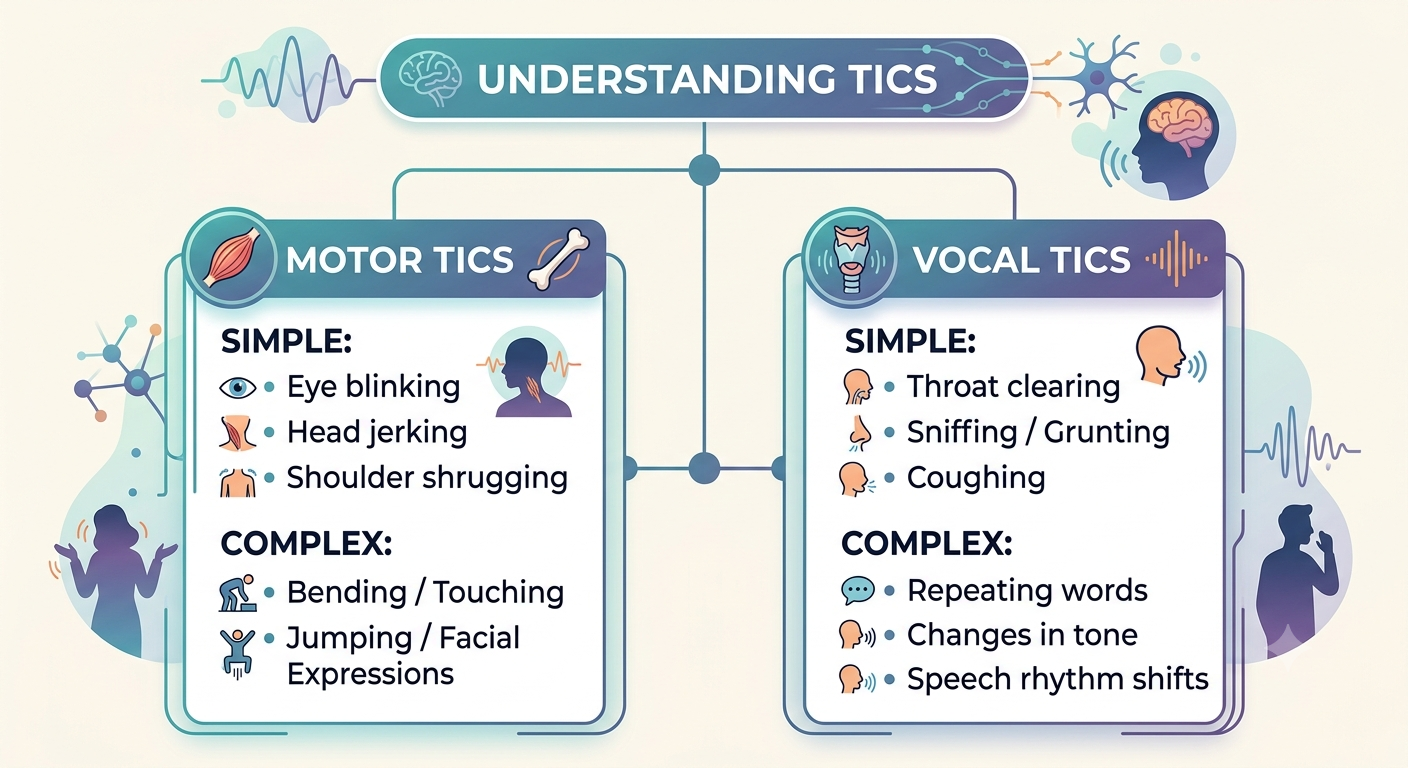
Key Features of Tics to Keep in Mind:
Premonitory Urges: Many people describe feeling a physical sensation, a build-up of tension, tingling, or pressure right before a tic occurs. Performing the tic relieves that sensation.
The "Waxing and Waning" Nature: Tics naturally fluctuate. They can change in frequency, type, location, and severity over time. A tic that is prominent this month may fade next month and be replaced by a different one.
Environmental Triggers: While tics are neurological, factors like excitement, fatigue, stress, anxiety, or illness can temporarily increase their frequency.
Fact vs. Fiction:
❌ Myth: "Everyone with Tourette's involuntarily swears."
Fact: Involuntary swearing or uttering inappropriate words (known medically as coprolalia) is heavily sensationalized in pop culture, but it actually affects only 10% to 15% of people with Tourette syndrome.
❌ Myth: "Tics are caused by anxiety or bad parenting."
Fact: Tourette syndrome is a biological, neurodevelopmental condition. While emotional stress can temporarily heighten tic frequency, anxiety does not cause TS.
❌ Myth: "If they can hold it in at school, they can stop it everywhere."
Fact: Suppressing tics (holding them in) takes enormous physical and mental effort. Children often suppress tics in class to fit in, only to experience an intense "tic release" once they reach a safe environment at home.
The Broader Picture:
It is rare for Tourette syndrome to exist in isolation. In Australia, over 90% of people with TS navigate one or more co-occurring neurodivergent profiles:
ADHD (60%–75% correlation): Challenges with focus, executive function, and energy regulation.
OCD & Obsessive-Compulsive Behaviors (around 30%): Repetitive thoughts or compulsions driven by a need for "just right" symmetry or alignment.
Sensory Processing Sensitivity: Heightened sensitivity to sounds, lighting, clothing textures, or crowded environments.
Emotional Regulation: Vulnerability to emotional overload due to the cognitive fatigue of managing tics throughout the day.
Where you go from here depends on what brought you to our site today:
Access Support & Diagnosis Pathways:
Learn how to navigate Australian medical specialists (neurologists, pediatricians, and psychologists) and access practical NDIS or healthcare support guides.
Explore School Accommodations:
Download our school packs designed to educate teachers, set up movement breaks, and prevent bullying in Australian classrooms.
Connect with Community:
Join local peer support networks, attend family camps, or reach out to our team, no one has to navigate this condition alone.